Friday, March 7, 2014

Chapters 1-10 (D)

In the 1930s, the number of cars being produced in America plummeted from 5.3 million units in 1929 to 2.4 million in 1930. From 1929 to 1932, sales of new automobiles fell by 75 percent and in 1932, automobile companies had a combined loss of $191 million. The drop in car ownership can be attributed to the high prices of cars and gasoline. In addition, the market for luxury cars disappeared and the market for lower-priced cars doubled from 1932 to 1933. Consequently, half of all automobile companies closed. Despite the glum outlook for automobile companies, Ford enjoyed enormous success with its Model A car. In the first two weeks of production, the cars were sold out. 1,261,053 Model A cars were sold in 1930.
Picture of a restored Ford Model A: 

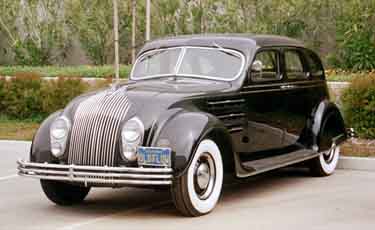
Prior to the Great Depression, GM and Ford each had control of a third of the car market and smaller companies shared the final third. GM did particularly well in the Great Depression by catering to poorer consumers by axing many of its luxury car brands and shifting its attention to Chevrolet, its high-volume, low-priced car. GM also incentivized people to buy Chevrolet cars by offering financing at a time when banks were not loaning much money. During the Great Depression, Ford, General Motors, and Chrysler became the dominant automobile companies. In 1939, the "Big Three" accounted for 90% of U.S. automobile production. Hudson, Nash, Packard, Studebaker, and Willys-Overland comprised of most of the last 10% share. These companies mostly produced luxury and mid-priced cars, which caused a steep decline in sales as the demand for expensive cars. From only an 8% market share before the Great Depression, Chrysler became a powerful player because of its high production rate, which was about 90 cars per hour. In addition, Chrysler’s Airflow design, famed for its aerodynamic efficiency, became an industry standard. 
Picture of a restored Chrysler Airflow:


Thursday, March 6, 2014

Chapters 1-10 (H)

When addressing the brain-washing that the bank has done to a tractor driver, Steinbeck uses repeated diction, specifically the words "goggled" and "muzzled", in order to illustrate his point that the people who work for greedy corporations are blind to the suffering that they cause and are unable to speak up against the unethical practices that they are forced to do. Steinbeck writes:
A twitch at the controls could swerve the car', but the driver's hands could not twitch because the monster that had built the tractor, the monster that sent the tractor out, had somehow got into the driver's hands, into his brain and muscle, had goggled him and muzzled himgoggled his mind, muzzled his speech, goggled his perception, muzzled his protest (35).
 Anaphora is used in this passage in order to emphasize the bank's ferocity because the bank uses people as an instrument to exploit the land for financial profit, and changes people to become callous and uncaring about nature or their farming community. Repetition of the words "goggled" and "muzzled" shows how that the bank is restricting the senses of tractor driver. As a result, the driver is unable to see how his job is ruining the livelihoods of the tenant farmers because he only cares about the money that he earns by razing down the land. Big business has corrupted the tractor driver because it prevents him from comprehending his betrayal of the community. Instead, the driver is a puppet of corporations, characterized by "monsters", that are earning profit by evicting the tenant farmers and using machinery to work the land. The placing of the repeated words in front of each clause, "goggled...muzzled...goggled...muzzled..." demonstrates the methodical ways that the bank oppresses the driver by restricting his senses and his obligation to speak out against the bank's practices. 

Tuesday, March 4, 2014

Chapters 1-10 (G)

One of the major conflicts explored in the novel is man versus machine, as technology begins to take over jobs previously held by humans and changing the way that people interact with nature. Steinbeck is sympathetic to the plight of tenant farmers struggling to compete with the tractors that are taking over their jobs. A scene that shows the struggle between farmers and machines is when a tractor razes down a house as its inhabitants watch, powerless to stop the destruction. Steinbeck writes:
The tractor cut a straight line on, and the air and the ground vibrated with its thunder. The tenant man stared after it, his rifle in his hand. His wife was beside him, and the quiet children behind. And all of them stared after the tractor (39).
This quote reflects the angry sentiments of the tenants who have been replaced by the tractor. The machine is literally leaving the people behind as it continues onwards, which shows that the advance of technology comes at the expense of humans that will be  unemployed and forced to leave their farms as a result of cheaper, more efficient ways of farming.  The demolition of the house by the machine symbolizes the wrecking of people's lives by technology because machines displaces tenant farmers and their families, who will have to migrate west in search of employment.

Not only does the machines cause the eviction of farmers, the usage of tractors causes the detachment of people from nature. The loss of personal connections to the land enrage the farmers and serves to intensify the conflict between man and machines as the farmers attempt to cling on to their old farming methods. Whereas the farmers take great care of the land, the tractor drivers lose their connection with nature as a result of machinery that has replaced humans. This transformation of tractor drivers from a person to a machine-driven robot is described by:

A twitch at the controls could swerve the car', but the driver's hands could not twitch because the monster that had built the tractor, the monster that sent the tractor out, had somehow got into the driver's hands, into his brain and muscle, had goggled him and muzzled him—goggled his mind, muzzled his speech, goggled his perception, muzzled his protest (35).
The usage of technology in order to do what had been done by farmers leads to a mechanical, unthinking way of life as people, such as the tractor driver, become driven by banks and greedy capitalists instead of relying their intuition to determine what is best for the land. The clash between man and the machines will continue in The Grapes of Wrath as the farmers refuse to adapt and accept the modern, fast-paced way of life set by advances in technology.