Picture of a restored Ford Model A:
 source: Ford Model A Automobile
Prior to the Great Depression, GM and Ford each had control of a third of the car market and smaller companies shared the final third. GM did particularly well in the Great Depression by catering to poorer consumers by axing many of its luxury car brands and shifting its attention to Chevrolet, its high-volume, low-priced car. GM also incentivized people to buy Chevrolet cars by offering financing at a time when banks were not loaning much money. During the Great Depression, Ford, General Motors, and Chrysler became the dominant automobile companies. In 1939, the "Big Three" accounted for 90% of U.S. automobile production. Hudson, Nash, Packard, Studebaker, and Willys-Overland comprised of most of the last 10% share. These companies mostly produced luxury and mid-priced cars, which caused a steep decline in sales as the demand for expensive cars. From only an 8% market share before the Great Depression, Chrysler became a powerful player because of its high production rate, which was about 90 cars per hour. In addition, Chrysler’s Airflow design, famed for its aerodynamic efficiency, became an industry standard.
Picture of a restored Chrysler Airflow:
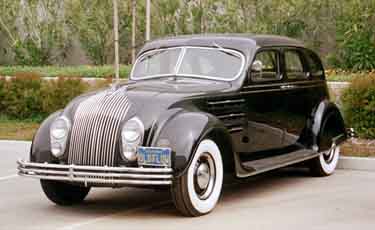 source: Chrysler Airflow (1934)
No comments:
Post a Comment